
About Tatami Way
Made on the mat.
I’ve spent most of my life training in martial arts, and my career building software. For almost as long, I’ve wanted to build something that helps students train and helps my senseis run their dojo. Tatami Way is where those two paths meet.
Why “Tatami Way”
A tatami is the mat every student trains on. The Way is the path from a first bow to black belt. I named the platform after both, because a dojo needs the ground and the path.
Our mission is to give every dojo the tools to teach the Way, on the mat and between classes.
Chad Howell, Founder
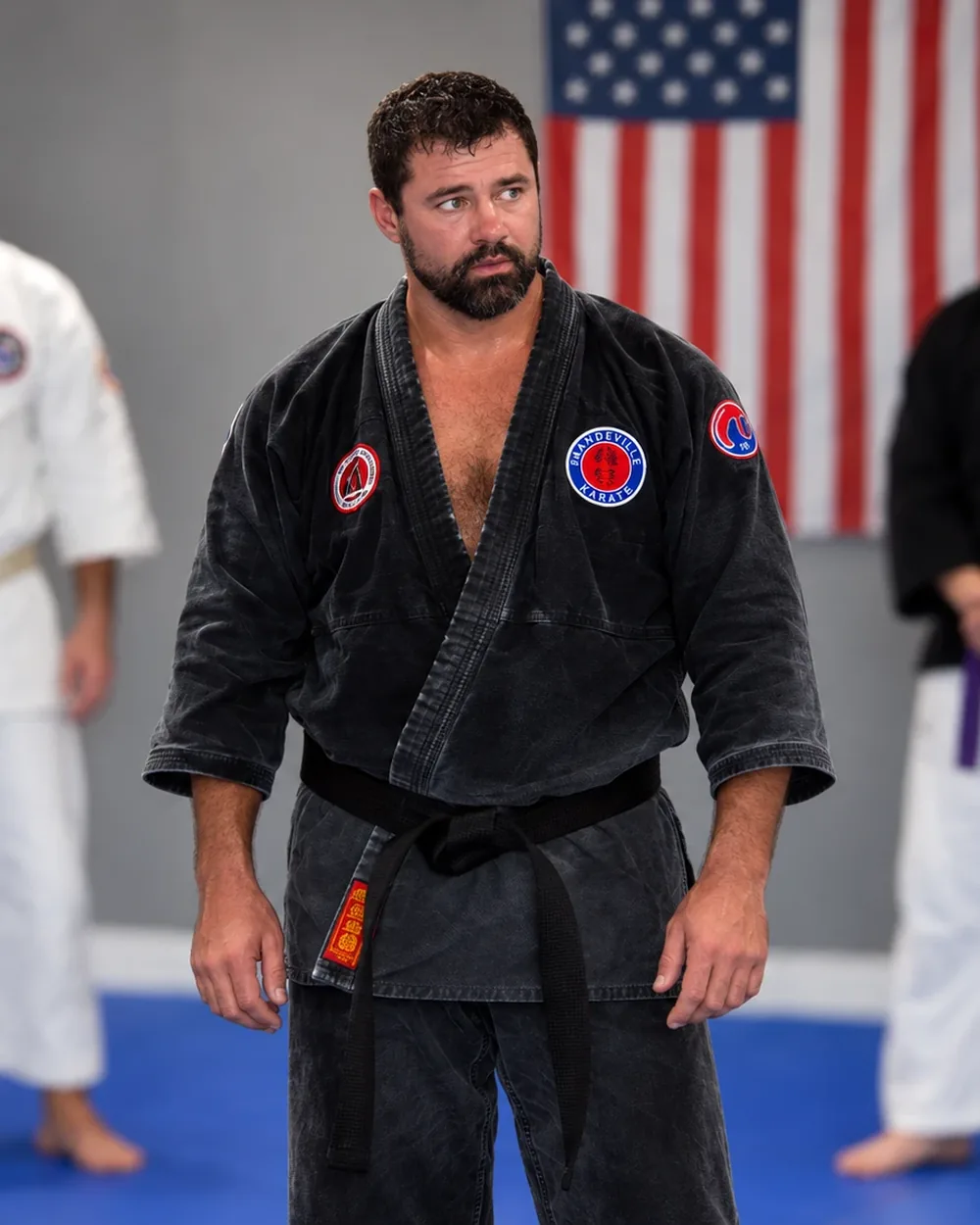
A life on the mat.
My path hasn’t been a straight line through one school. It has been broad, sometimes interrupted, and always renewed.
- Age five · New Orleans
Learning beside my father
I started training at five or six, with my father. We practised in the living room, went to tournaments and brought home trophies, and he went on to earn his black belt. When we moved away my training stopped, but the foundation was laid.
- After college · Scott, Louisiana
Finding San Yama Ryu
I wanted something more serious than a workout. An introduction led me to San Yama Ryu, a private school with no storefront that people found by word of mouth. I trained there for more than four years. A shoulder injury just before my brown belt test, our first son and a move home to Mandeville interrupted it, but those years shaped how I think about martial arts, and about life.
- Mandeville
Training alongside my wife
Back home, nothing matched the standard San Yama had set. When my wife decided to learn to defend herself, we found Krav Maga and, after a few schools, an instructor whose discipline and intensity felt right. We trained together for five or six years. I had shared the mat with my father; now I shared it with her.
- Mandeville
Starting over as a white belt
After a second shoulder injury, an old high school friend who had taken over a local karate school invited me in. I started again at white belt and worked my way to black belt, learning a new system under another instructor.
- Today
Full circle
I’ve returned to San Yama Ryu to finish the black belt I was working toward all those years ago, and I keep training in karate. Two martial arts homes, and no plan to stop growing.
The common thread has been the desire to become more capable, more disciplined, and more grounded.
Software for the dojos I trained in.
I’ve always wanted software that helps students train between classes and helps a sensei run the dojo. It took a few tries, and a few years.
eDojo
While training at San Yama, I started building eDojo: a home for our curriculum and a message board for the school. It never really took off.
Never stopped
I kept training, and I kept building software for a living. The idea of software made for a dojo never went away.
One website, then another
I went back to the original vision with one focused effort: a website for San Yama Ryu. Then one for Jissen Martial Arts.
Tatami Way
From there it grew: curriculum by belt, study, the schedule, attendance, promotions, families and messaging. Everything a sensei needs, between classes and on the mat.
And we’re not done. Tatami Way keeps growing, and the dojos we work with help decide what comes next.
What we hold to
The instructor stays in charge
Tatami drafts and suggests. Ranks, grades and anything a student sees are your call.
Your dojo, your name
Your website, app and emails carry your brand, not ours.
Kids are protected by design
Consent, approval and safe messaging are built into the system, not left to settings.
Start small, keep everything
Lay down what you need. Pick something up and nothing is lost.